Amazon
sightmap atlas add amazonUS marketplace — search, product detail, best-seller charts, and a text-free 404, mapped signed-out.
Views
| View | Route | Components | Requests |
|---|---|---|---|
| BestSellers | /gp/bestsellers | 4 | 1 |
| Home | / | 4 | 1 |
| NotFound | /** | 5 | 0 |
| ProductDetail | /dp/:asin | 15 | 3 |
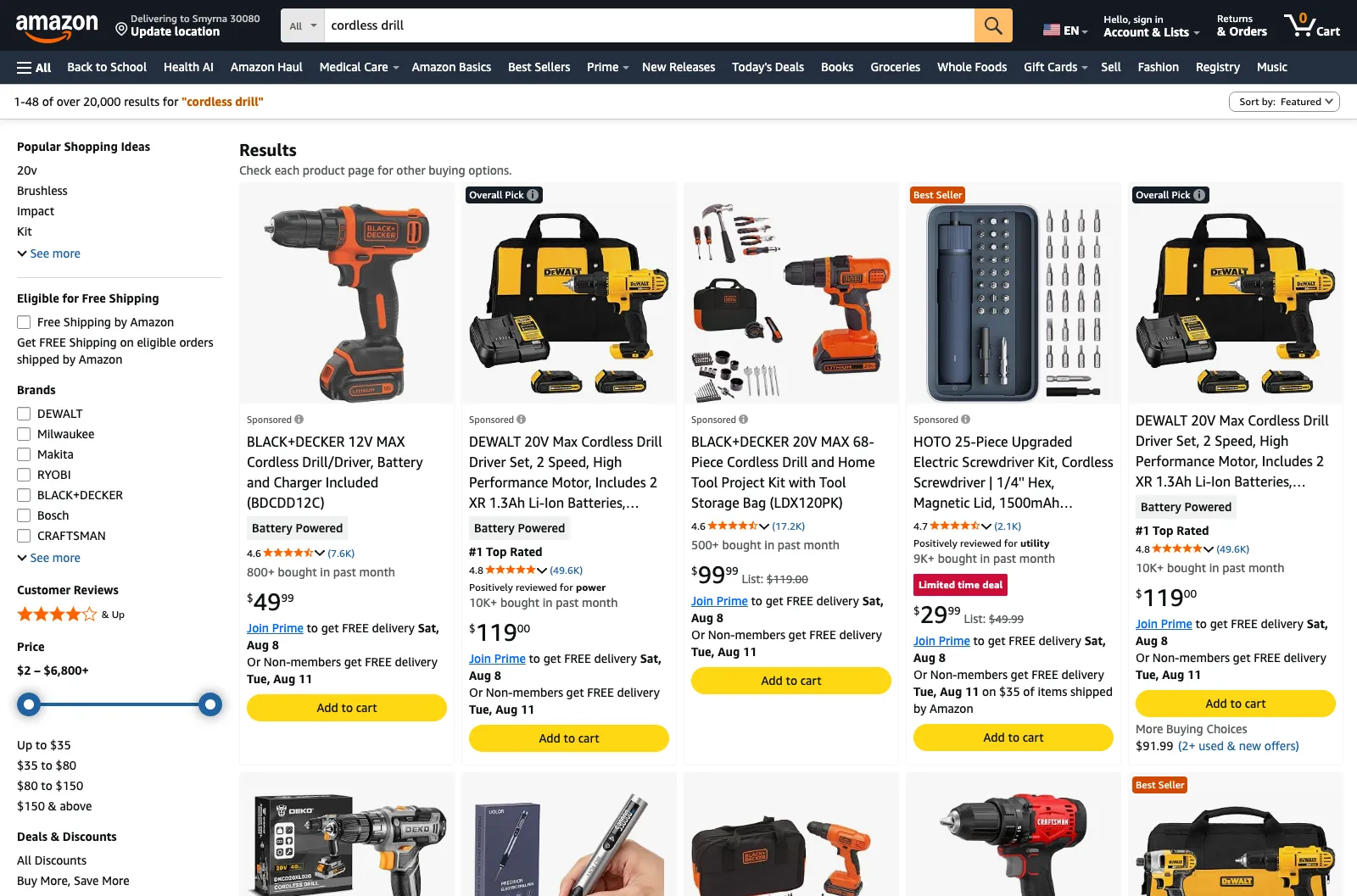
| SearchResults | /s | 10 | 3 |
Amazon
The US marketplace, mapped as a signed-out shopper.
Coverage
| View | Route | What it holds |
|---|---|---|
Home |
/ |
Shoppable card deck and recommendation rails |
SearchResults |
/s |
Refinement rail, 48-card result grid, pagination |
ProductDetail |
/dp/:asin |
Three-column layout, buy box, feature slots |
BestSellers |
/gp/bestsellers |
Department rail and ranked charts |
NotFound |
/** |
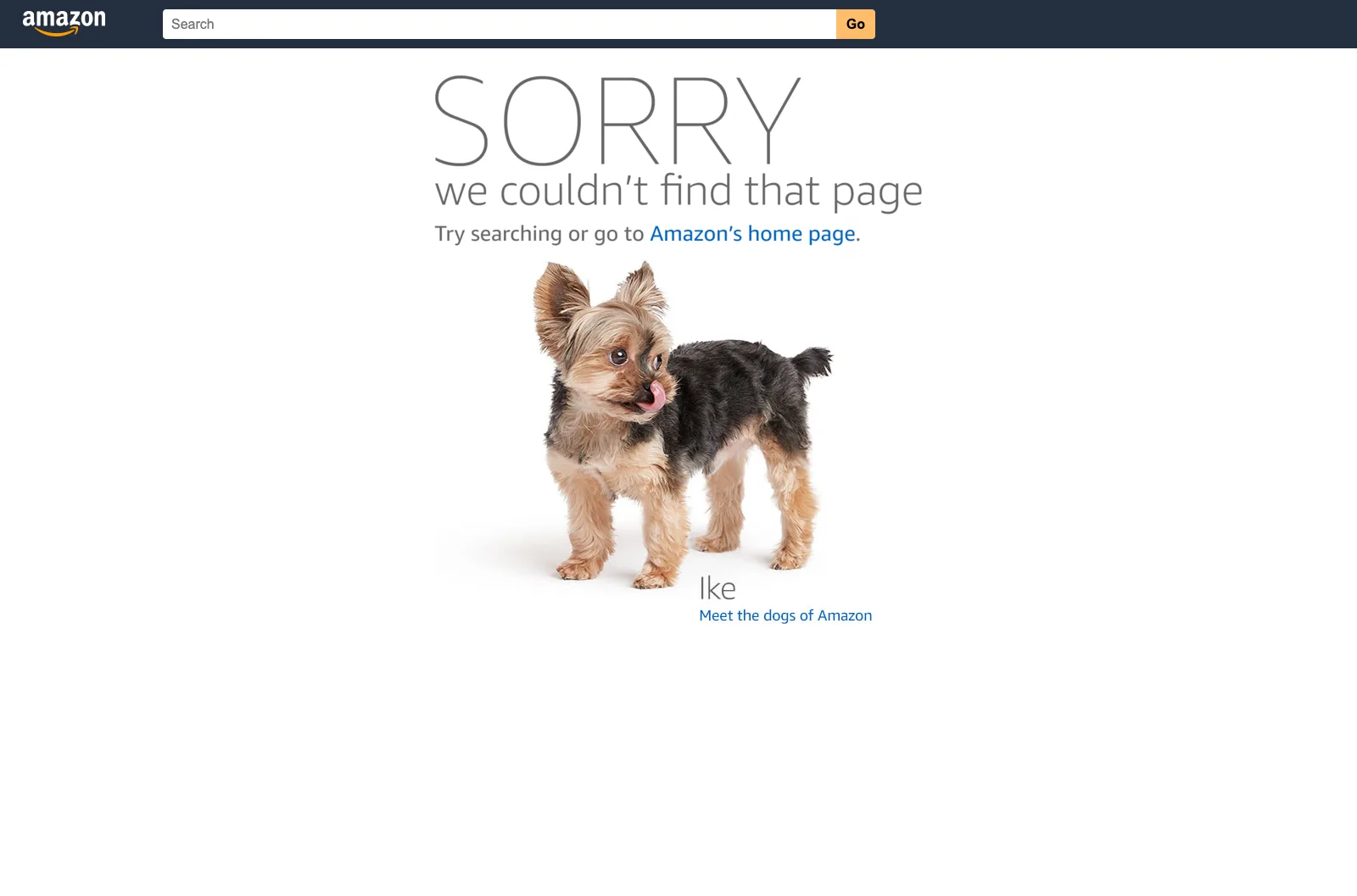
Text-free error page |
GlobalNav, KeyboardShortcutMenu, and PageRoot are global. All five views
report 0 orphaned coverage, with every selector sel-probed on 2026-08-06.
Hazards
The 404 has no text at all. document.body.innerText is the empty string.
The apology is the alt attribute of an image, the three links have image
content and empty text, and the markup is hand-minified with single-letter ids
(#a form, #e input, #f submit). An agent that detects errors by reading
page copy finds nothing and will most likely decide the page is still loading.
What works: document.title === "Page Not Found", the absence of the entire
nav- chrome, and the image alt text.
Ids are duplicated on the product page. Amazon renders several buy-box
variants and hides all but one, so #add-to-cart-button and #buy-now-button
each match twice and #availability matches three times. Every duplicate sits
inside #buybox and the hidden ones measure 0×0. querySelector returns
document order, which is not a guarantee of visibility. There is also an
unrelated #add-to-cart-btn placeholder outside the page root, making three ids
in that family.
Most of the product page is empty. The page is built from slots whose ids end
_feature_div. On the article mapped here there were 541 of them and 501
rendered with zero height. A slot existing means the template reserved it, not
that it has content.
[data-asin] is not the result selector. It matches 88 elements on a search
page that has 48 results, because carousels, ad slots, and recommendation strips
carry ASINs too. Use [data-component-type="s-search-result"], and read fields
through the data-cy attributes (title-recipe, price-recipe,
reviews-block, delivery-recipe), which appear exactly once per card.
Ids that look stable and are not. #CardInstance<random> on the best-seller
charts is regenerated per render. #wd-shoppable-N on the home page is
positional, so the number identifies a slot rather than a promotion.
The page depends on where you are. The header carries an IP-inferred delivery location, and prices, availability, and delivery estimates all follow from it. Two agents in different places get different pages at the same URL.
Known gaps
Cart and checkout stop at the buy-box buttons. Going further means putting items into a real cart on a live marketplace.
Signed-in surfaces (orders, lists, recommendations tied to an account) are out of scope per docs/POLICY.md.
ProductDetail is pinned to one ASIN. Feature slots vary enormously by
category, so a media or grocery article renders a substantially different set of
slots than the accessory mapped here. The three-column skeleton holds; the slots
inside it do not.
SearchResults and BestSellers were mapped from one query and the top-level
chart. Deeper chart departments use the same components.
Screenshots
Signed-out views of public pages. The search screenshot shows the header's IP-inferred delivery city and ZIP, which is Amazon's geolocation guess rather than anything a visitor entered. The 404 screenshot is included because the page is unusual enough to be worth seeing.