YouTube
sightmap atlas add youtubeYouTube mapped signed in — home, watch, search, channel, playlist and the 404, and the attribute that tells three of them apart.
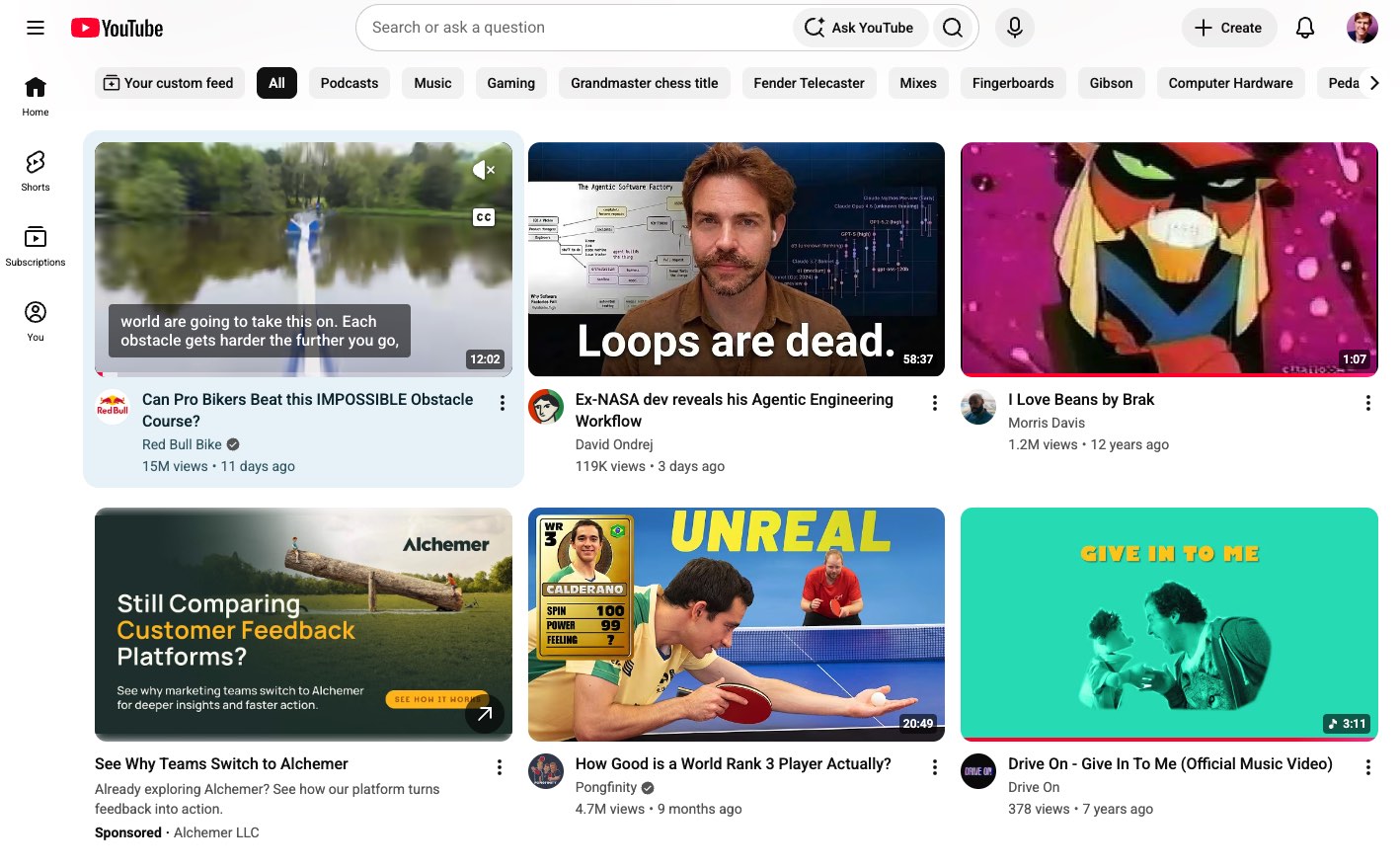
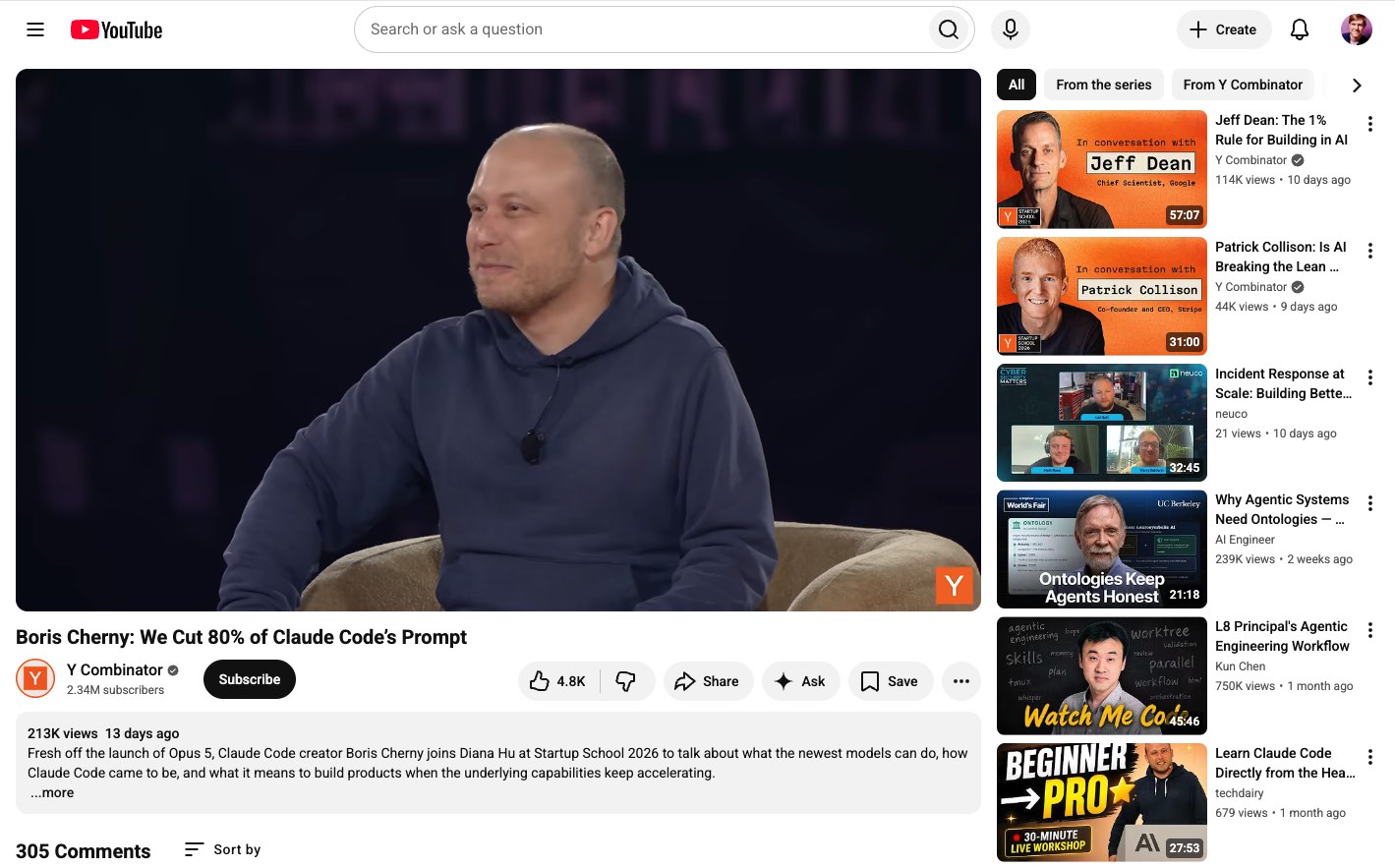
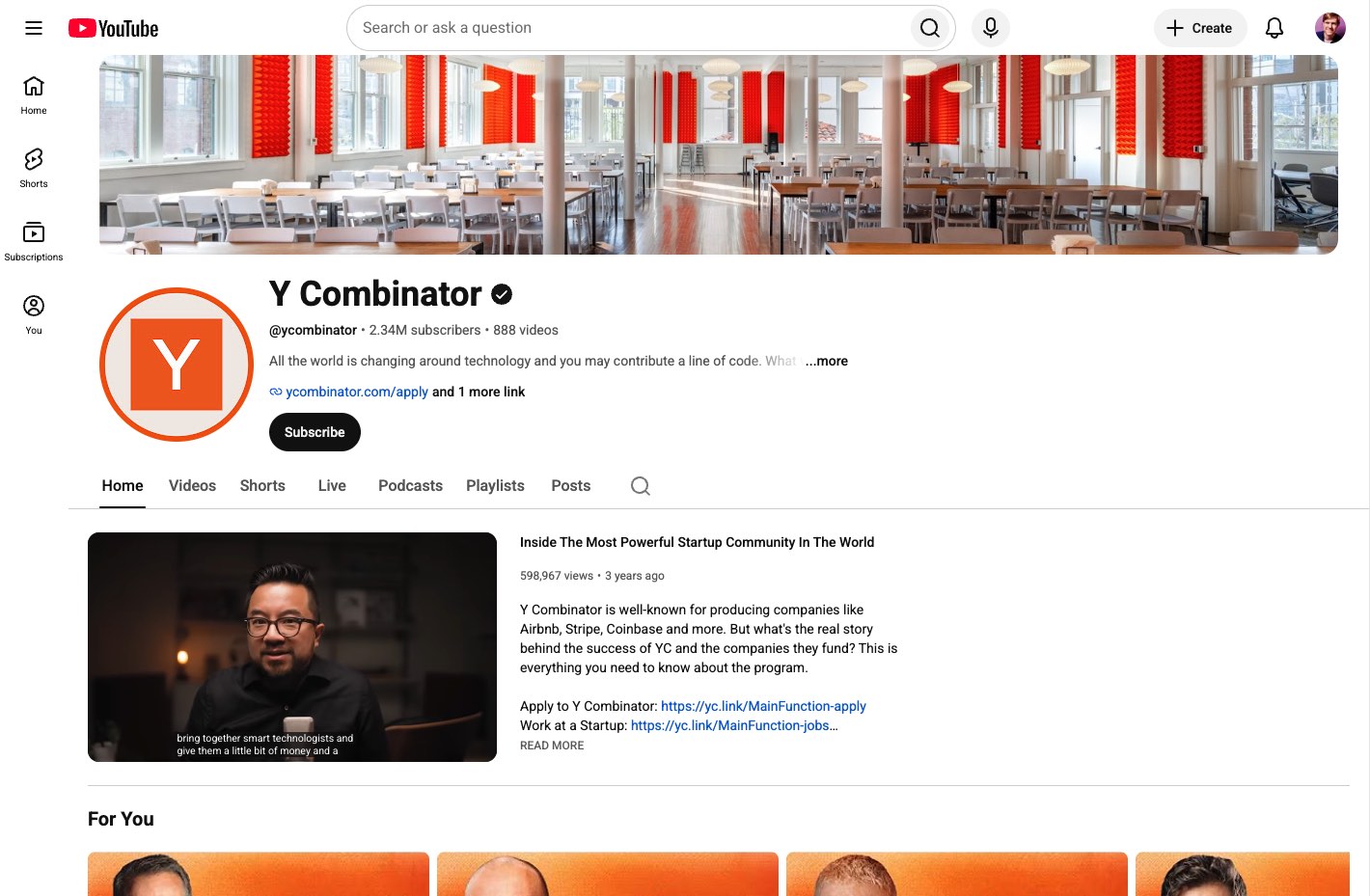
Views
| View | Route | Components | Requests |
|---|---|---|---|
| SearchResults | /results | 9 | 0 |
| Channel | /@:handle | 8 | 0 |
| Playlist | /playlist | 6 | 0 |
| NotFound | /** | 1 | 0 |
| Home | / | 5 | 0 |
| Watch | /watch | 13 | 0 |
YouTube
Six views — home, watch, search, channel, playlist, and the 404. 47 components, 5 requests.
Why the map matters
YouTube's custom elements look like a clean API and aren't. Home, channel and
playlist are all ytd-browse; only an attribute separates them, so route
detection by element silently conflates three pages. Video rows ship under two
renderers at once, so counting either alone undercounts. And the selectors most
agents already carry — input[name="search_query"],
ytd-playlist-video-renderer — match nothing at all now, returning empty lists
rather than errors.
Try it
sightmap atlas add youtube
Sign in first if you want the home feed; watch, search and channel work either way.
What bites
- Three routes share one element. Home, channel and playlist are all
ytd-browse, separated only by itspage-subtypeattribute. - The search field is a
textarea, not an input. - Video rows use two renderers at once. Search carries both
ytd-video-rendererandyt-lockup-view-model. On a playlist the legacy renderer matches nothing. - Subscribe is a different element on channel and on watch.
- The watch page hides duplicate copies of its own controls, and for the like button the first match in document order is the hidden one.
- Ids are not unique, and the icon sprite owns generic ones like
#add.
Three screenshots, captured signed in. Only the author can re-verify this entry — CI cannot, and neither can a reviewer.